
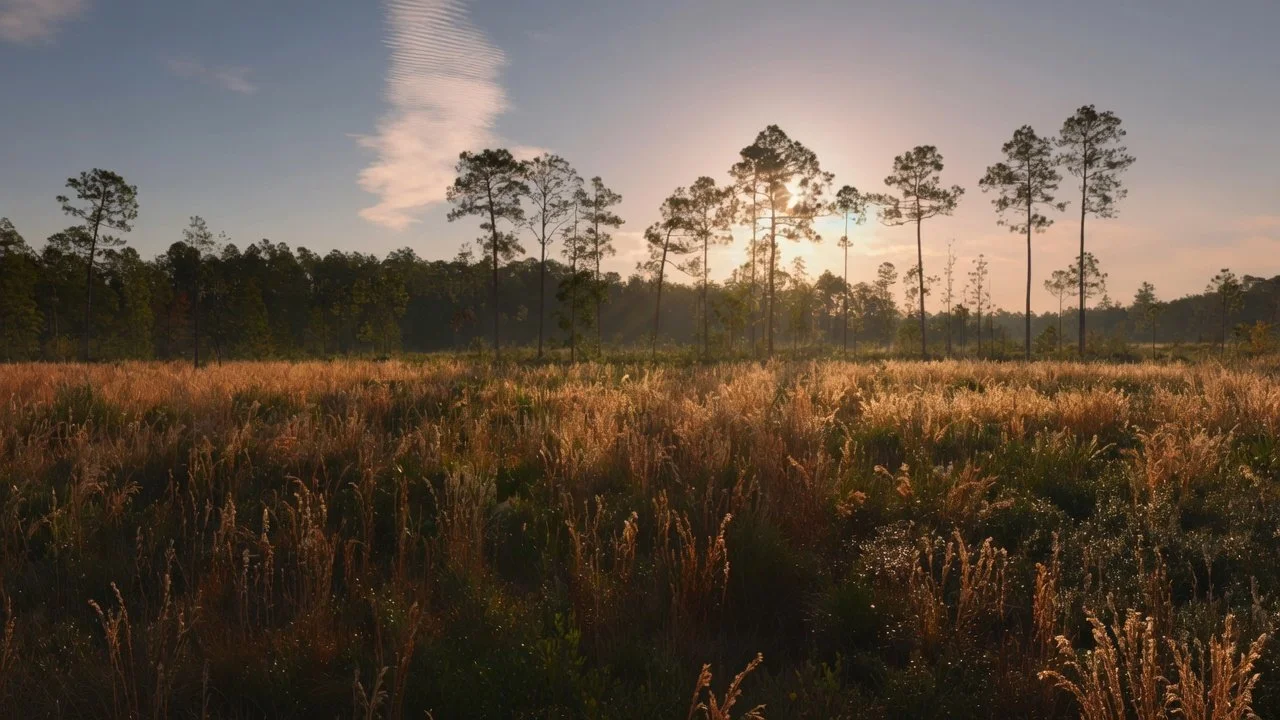
What does it mean to build something meant to outlive us?
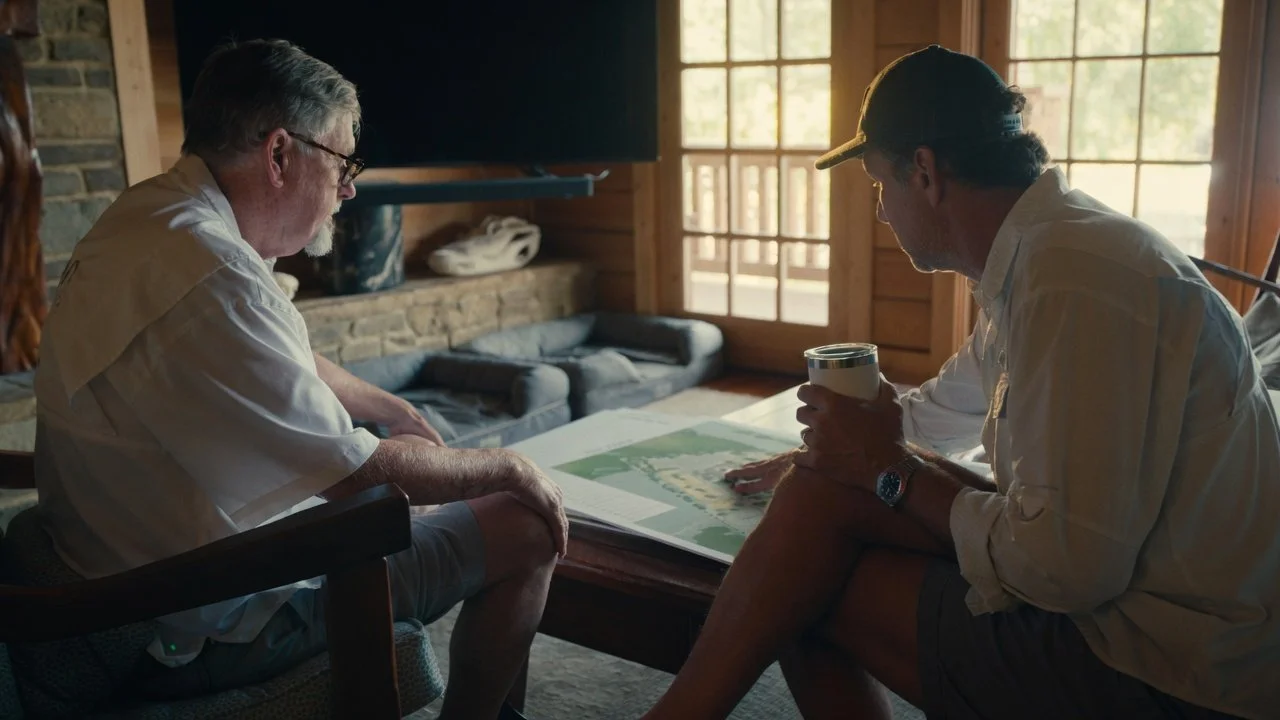
At the edge of the Okefenokee Swamp, where the land itself takes centuries to form, two men are building a regenerative farm and intentional community meant to outlive them—a meditation on legacy, stewardship, and what we owe the future.
A vision larger than a lifetime
Near the Okefenokee, one of America’s most extraordinary natural landscapes, Jeff Meyer and Doug Davis are working to build The Farm at Okefenokee—a regenerative farm and intentional community intended to endure beyond its founders.
As the Farm evolves, Trembling Earth follows their effort to transform an ambitious vision into a living legacy. Set against the deep time of the Okefenokee, the film explores the relationship between land, food, community, and purpose—and asks what each generation owes the ones that will follow.
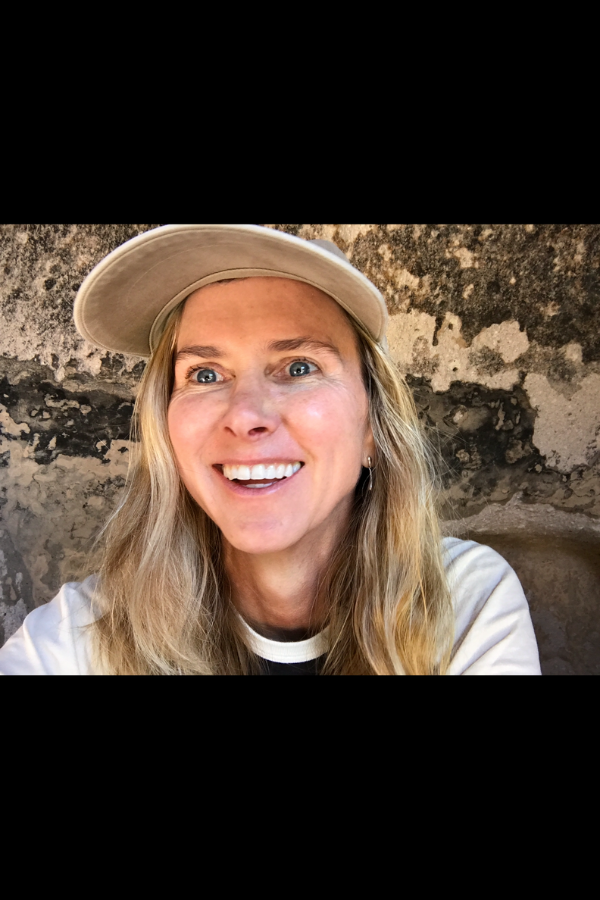
Director’s Statement
I didn't come to this story because I wanted to make a film about farming. I came because I've known Jeff Meyer for years, and I've learned that whenever he says, "I’ve got an idea," it's never just an idea. It's always an attempt to build something that matters. We'd worked together on several projects over the years, and I knew I wanted to be part of whatever he was building next.
What stayed with me wasn't the ambition of an intentional community on a regenerative farm. It was the fact that Jeff and Doug both understand, by the very nature of what they're creating, that the story doesn't end with them.
Most documentaries about big undertakings are structured toward a finish line: Will they pull it off? Will it work? Did it pay off? This one couldn't be. So the question I kept returning to wasn't whether they would succeed, but what it means to devote your life to something whose true success belongs to another generation.
The Okefenokee, the refuge next door, holds some of the answers. Peat in that swamp takes centuries to become solid enough to support a tree. Nothing there moves at the pace of a human life, and yet everything there eventually gets built.
I wanted the film to hold that same patience…to resist the urge to manufacture stakes the story doesn't actually have, and instead sit inside the slower, harder truth: that stewardship isn't a single decision. It's thousands of small ones, repeated through freezes and droughts, fires and floods, and years when the math doesn't work.
I was filming with Jeff in his kitchen one morning while he talked about modeling The Farm after the community where he grew up in Amana, Iowa. As he spoke, he was making the same breakfast his grandmother had prepared for him every morning as a boy. That's when thinking in generations stopped being an idea and became something I could see.
Ultimately, I hope audiences leave thinking less about Jeff and Doug's legacy than their own. Because all of us are building something: families, communities, businesses, traditions, friendships. And the question isn't whether we'll see the finished work. The question is whether we'll keep showing up for it anyway.
Ellyne Lonergan